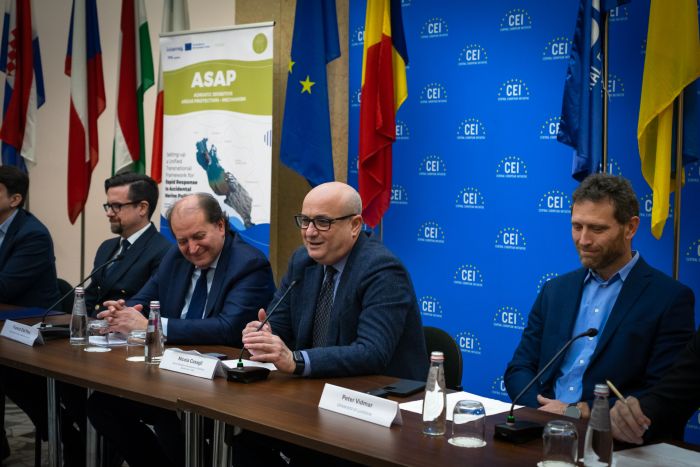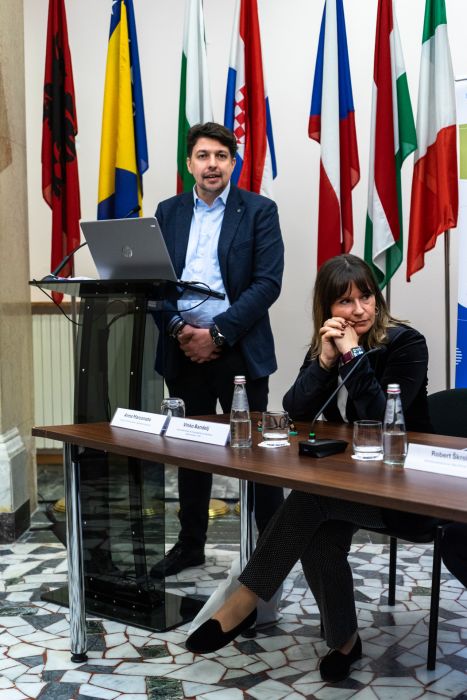
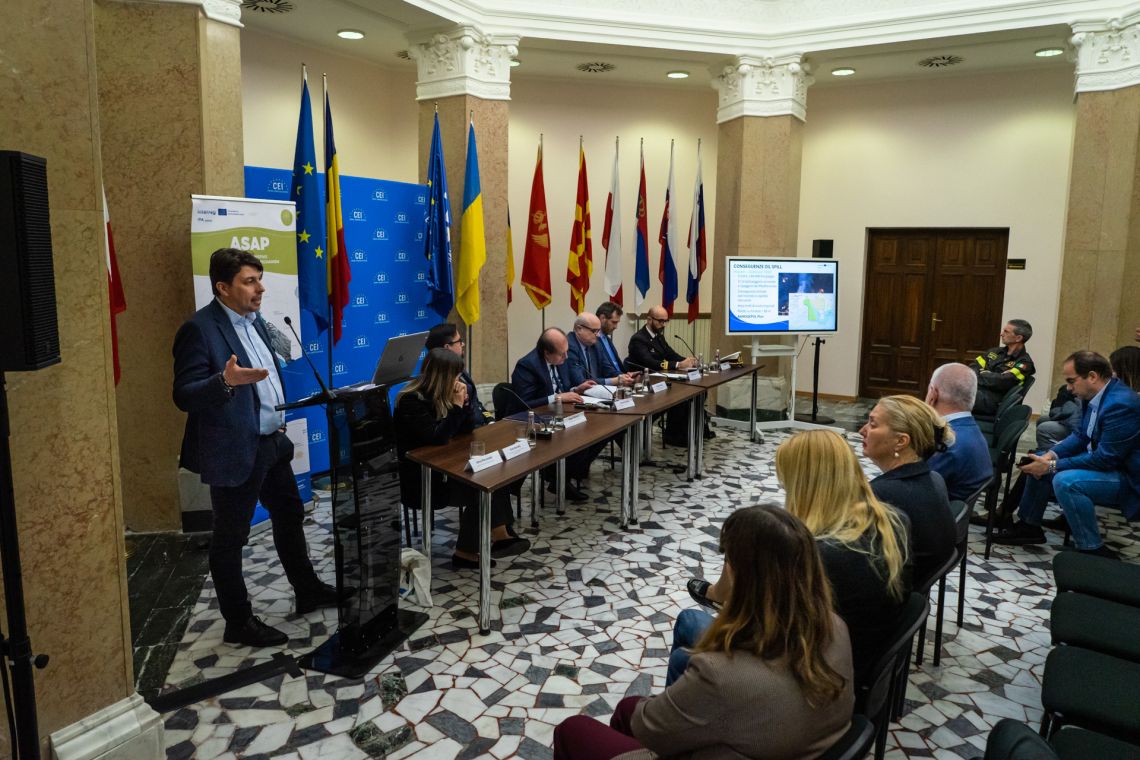
On 4 February 2026, updated results of ASAP – Adriatic Sensitive Areas Protection mechanism - a project funded by the Interreg IPA ADRION Programme and led by the Executive Secretariat of the Central European Initiative (CEI-ES) - were presented today in Trieste. The project aims to strengthen the protection of the Adriatic Sea through a joint, science-based approach to preventing and responding to marine pollution, including oil spills.
Hosted at the CEI premises, the event focused on the consolidated outcomes of the project’s first phase, including environmental risk analysis, oil spill simulations and the mapping of the most vulnerable coastal and marine areas. These results provide concrete tools to improve preparedness and coordinated response to maritime pollution incidents across borders.
For Italy, the project involves the Istituto Nazionale di Oceanografia e di Geofisica Sperimentale (OGS), which contributes key scientific and technical expertise. The risk maps and analyses presented are intended to directly support decision-making, emergency planning and public investments.
ASAP brings together scientific institutions, maritime authorities and stakeholders from six Adriatic countries – Albania, Bosnia and Herzegovina, Croatia, Italy, Montenegro and Slovenia – to develop shared methodologies, high-resolution environmental modelling, maritime traffic and accident analysis, and vulnerability assessments. The project also builds on experience gained in the northern Adriatic through the EU-funded NAMIRS project, scaling up good practices at basin level.
“Projects like ASAP turn our priorities into concrete action, strengthening resilience through transnational cooperation,” said Franco Dal Mas, CEI Secretary General. “The data presented today help guide policies and investments to protect the sea, coastlines and communities, in the awareness that no country can act alone.”
OGS President Nicola Casagli highlighted the importance of lasting cooperation, noting that the risk maps produced through oil spill simulations are “an operational and immediately usable tool” and that stable coordination among Adriatic countries is essential to consolidate the results achieved.
The event brought together representatives of CEI, OGS, the Autonomous Region of Friuli Venezia Giulia, maritime authorities and academia, confirming the strong institutional and scientific partnership underpinning the project.