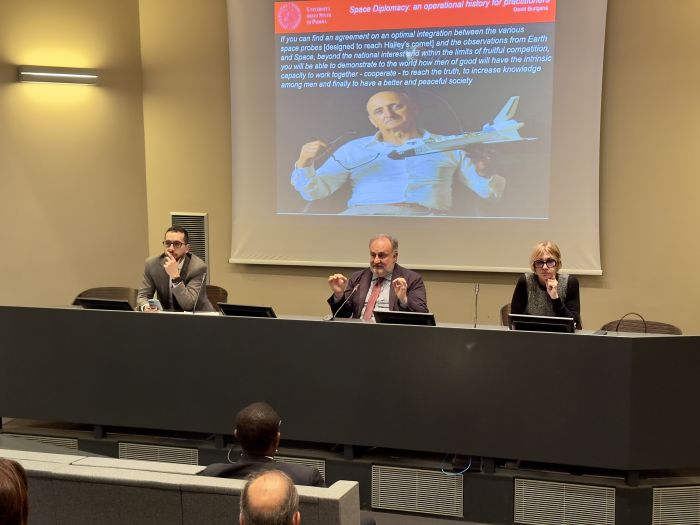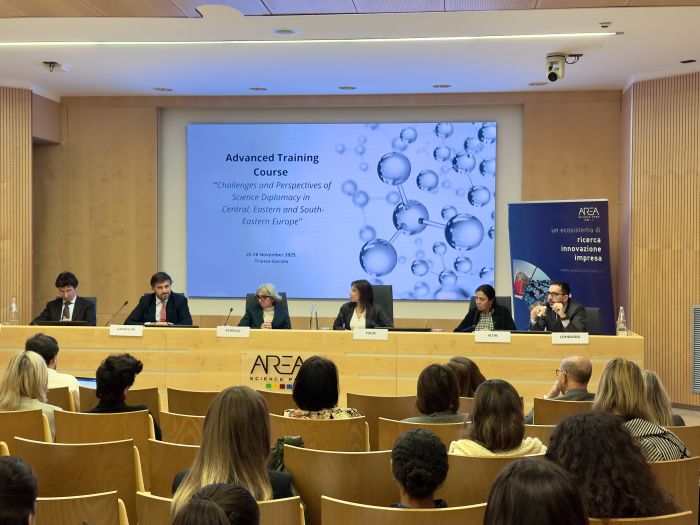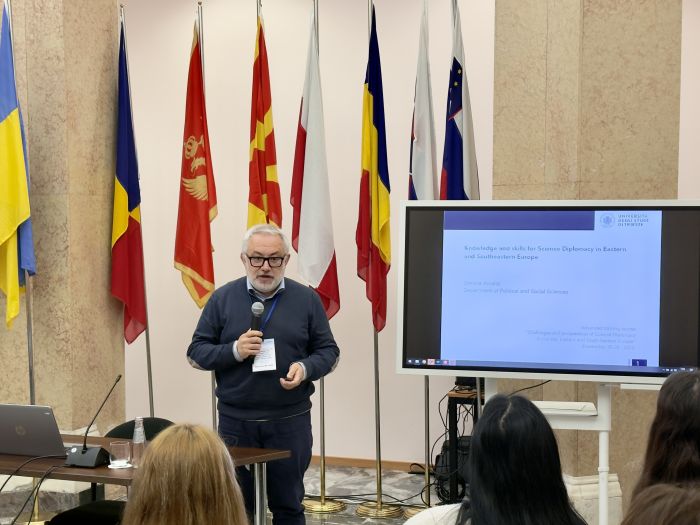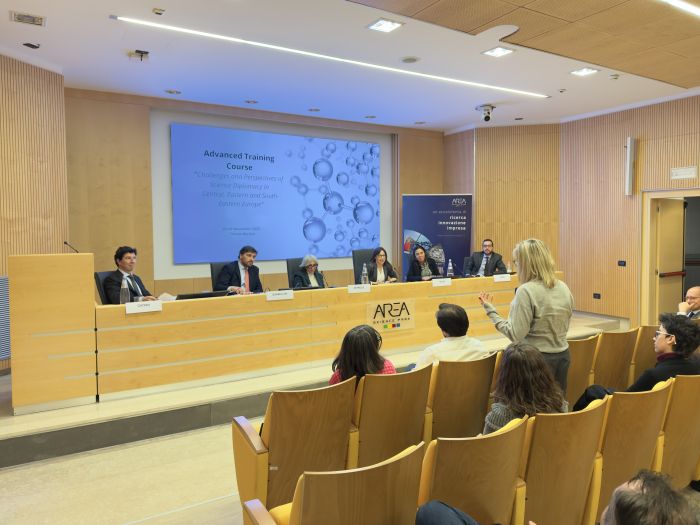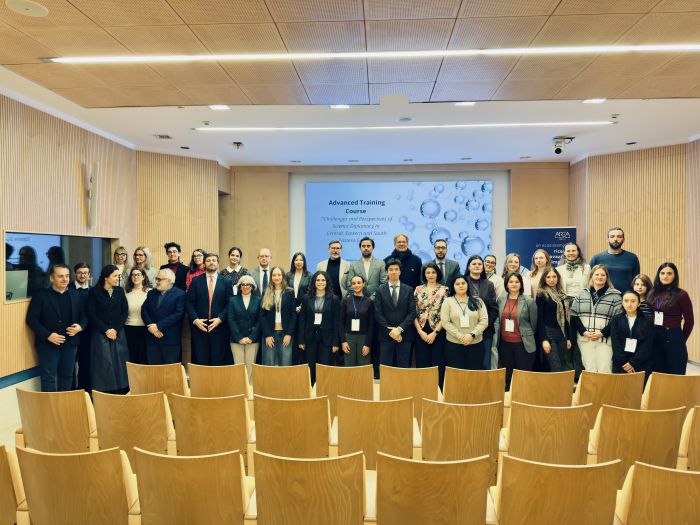
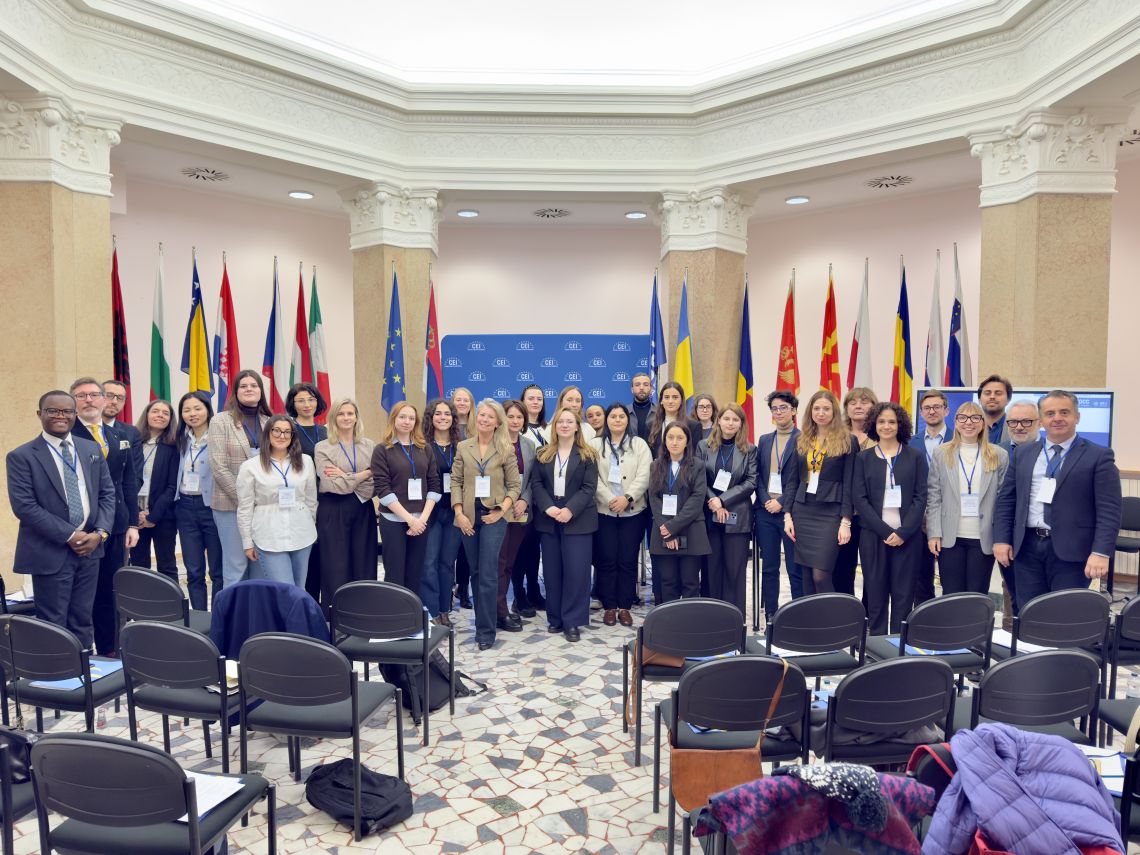
From 25 to 28 November 2025, the Advanced Training Course “Challenges and Perspectives of Science Diplomacy in Central, Eastern and South-Eastern Europe” took place in Trieste and Gorizia. The initiative was co-organised by the CEI - Executive Secretariat, the Department of Political and Social Sciences of the University of Trieste, and the Friuli Venezia Giulia Region (FVG), and funded by the latter in the framework of the CEI-FVG Joint Work Programme 2024-2025.
The course gathered around 30 participants from several CEI Member States, including diplomats, public officials, scientists, research managers and students. Over four days, they engaged in an intensive programme covering the fundamentals of science diplomacy; the skills required to operate effectively at the interface of scientific cooperation and foreign policy; and the practical applications of science diplomacy across a range of key sectors, including energy, security, agriculture, cultural heritage, and space.
A dedicated focus was placed on the evolution of science diplomacy at the European level, in view of the adoption of a Council Recommendation on a European Framework for Science Diplomacy, expected in May 2026. Participants also examined UNESCO’s global and context-specific approaches to science diplomacy, which have gained new momentum over the past year.
KEY TAKEAWAYS
Understanding the impact of science on diplomacy, and diplomacy on science, is essential for navigating today’s fragmented geopolitical landscape.
Science diplomacy is a powerful tool for enhancing integration and supporting just transitions in Central, Eastern, and South-Eastern Europe. At the same time, the countries of this broad region can significantly contribute to global and European debates on science diplomacy.
The CEI offers a valuable multilateral space where meaningful encounters between diplomatic and scientific communities can be nurtured.
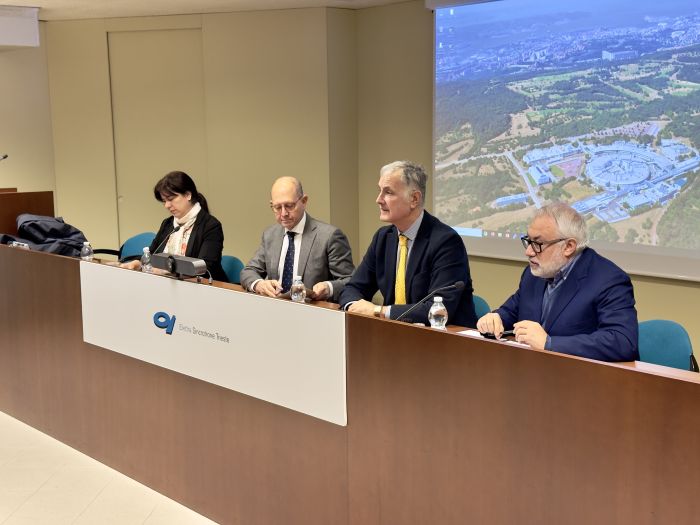
The programme featured a study visit to Elettra Sincrotrone Trieste, enabling participants to gain first-hand insight into the vibrant scientific and innovation ecosystem of the Friuli Venezia Giulia Region. These topics were further explored during the closing roundtable hosted by Area Science Park.
The course benefited from the contributions of distinguished speakers, whose expertise and enthusiasm fostered rich discussions and interactive sessions. Building on the outcomes and lessons learned from this edition, the CEI will continue to design and support future initiatives at the crossroads of science and diplomacy, in line with the objectives and priorities of its Plan of Action.
For more info: lombardo@cei.int