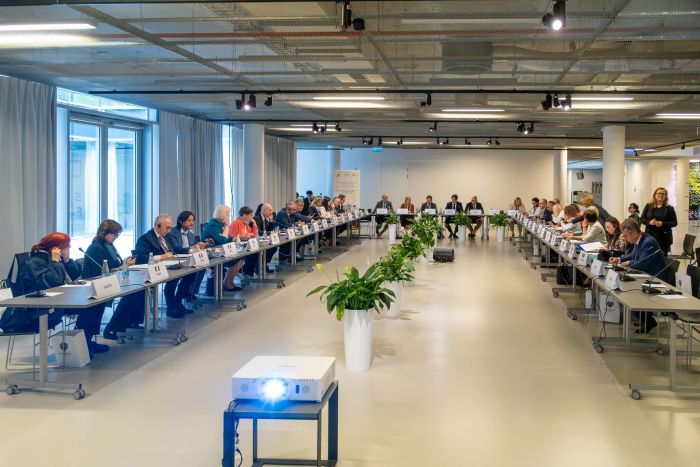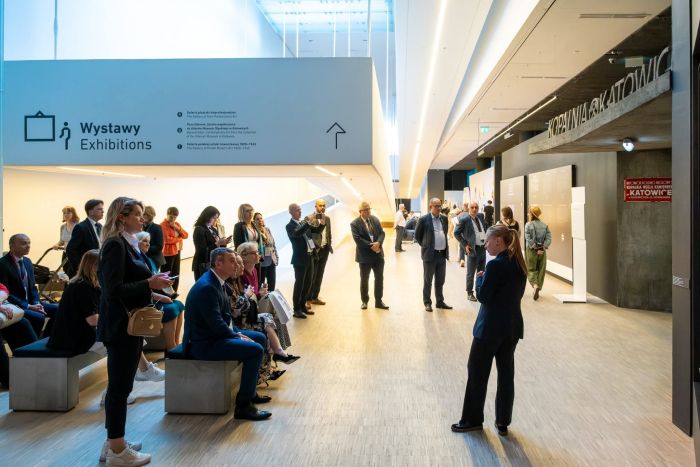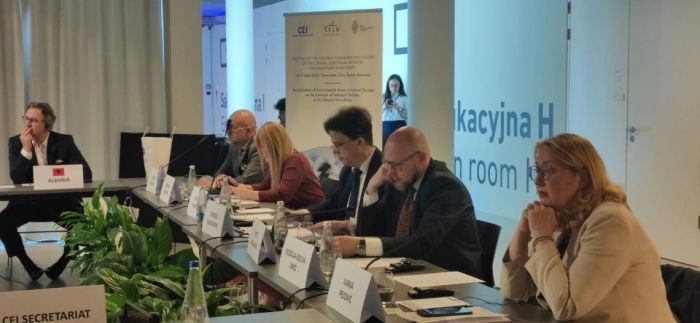
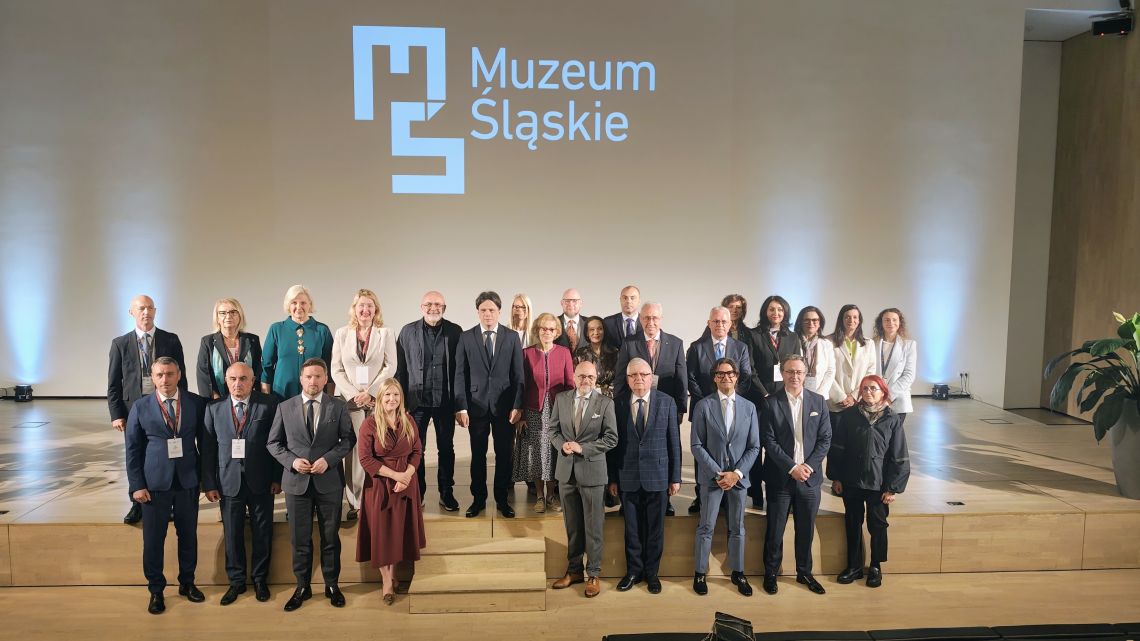
Parliamentary delegations from CEI Member States gathered at the Silesian Museum in Katowice, Poland, on 16 June 2026 for a meeting of the General Committee on Cultural Affairs of the CEI Parliamentary Dimension (CEI PD). Discussions focused on the revitalisation of post-industrial areas in Central Europe, with particular attention to successful projects in the Silesian Voivodship.
The session was presided over by Tomasz Głogowski, Chair of the General Committee on Cultural Affairs of the CEI Parliamentary Dimension, and Senator Piotr Masłowski, Vice-Chair of the Polish Delegation to the CEI PD . Introductory remarks were delivered by Rozália-Ibolya Biró, Chair of the Presidency of Romania in the CEI Parliamentary Dimension. The opening session also included presentations by local authorities who highlighted the revitalisation projects of cultural objects in the city of Katowice as well as the distribution of the EU funds on revitalisation in the region of Silesia and Industrial Monuments Route.
The CEI-Executive Secretariat was represented by Ivana Pejović, Deputy Secretary General, and Barbara Fabro, Senior Executive Officer. In her intervention, Pejovic underlined that post-industrial transformation across Central and Eastern Europe demanded a long-term vision and political commitment, pointing to Silesia as a valuable example of how heritage preservation and forward-looking development could be pursued together. She also emphasised the role of the CEI as a platform for exchanging good practices among regions facing similar transitions, contributing to sustainable development and EU enlargement.
Delegations actively contributed to the discussion by presenting concrete case studies of revitalisation projects across the CEI region, highlighting successful examples of former industrial sites transformed into community spaces, cultural centers, sports facilities, and gathering places for citizens and future generations.
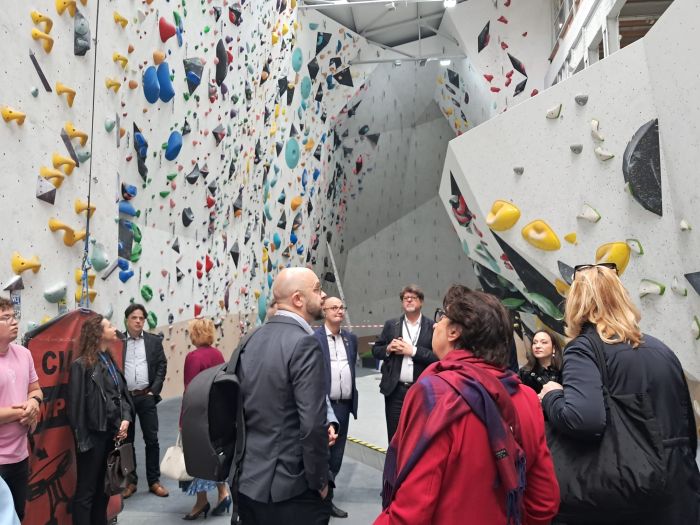
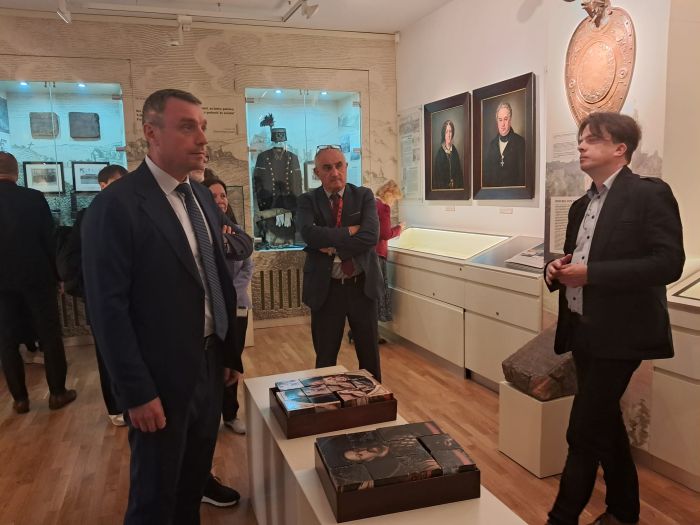
The broader programme of the meeting featured visits to several landmark sites showcasing Silesia’s successful transformation, including the former Rozbark coal mine in Bytom, which has been revitalised into a vibrant cultural and recreational hub hosting a theatre venue and climbing centre, and the Lead-Silver-Zinc Mine in Tarnowskie Góry, a UNESCO World Heritage site. Delegations also visited the Silesian Museum and the NOSPR concert hall in Katowice, both established on former industrial premises, and the historic miners’ district of Nikiszowiec.
The choice of Silesia as host was itself deliberate: the region stands as one of Europe’s most substantial examples of post-industrial regeneration, having reoriented a coal-dependent economy over three decades towards culture, education, and sustainable urban development.
The General Committee on Cultural Affairs is one of three General Committees of the CEI Parliamentary Dimension, alongside the General Committee on Political and Home Affairs and the General Committee on Economic Affairs. Together with the Parliamentary Assembly and the Parliamentary Committee, these bodies bring together representatives of national parliaments from CEI Member States to advance regional cooperation through interparliamentary dialogue, with the overarching goal of supporting European integration and sustainable development across the CEI region.
For more info: fabro@cei.int