
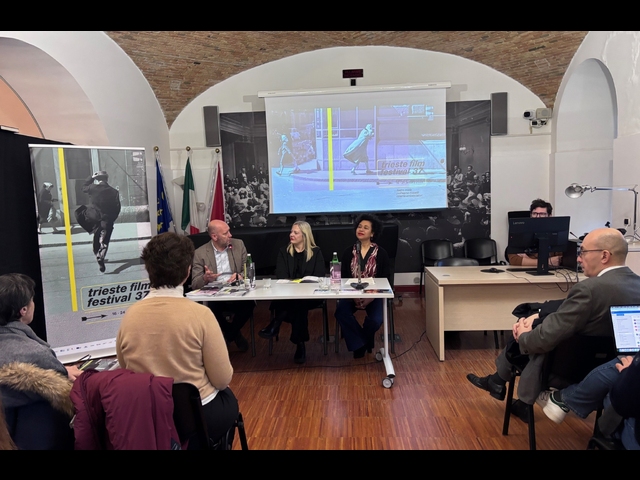
(ANSA) - TRIESTE, 09 GEN - A journey through the New Europe, drawing on stories from the past and the freshest memories to reveal the faces and voices of a new continent in the making. This is the 37th edition of the Trieste Film Festival, the showcase dedicated to Central and Eastern European cinema, which was presented today in Trieste. More than 120 events are scheduled from January 16 to 24, including feature films, documentaries, shorts, masterclasses, and meetings with filmmakers. The festival will open in two stages: it kicks off on January 16 at Teatro Miela with the Italian premiere of Franz, a biopic devoted to the iconic Bohemian writer Franz Kafka, directed by Polish filmmaker Agnieszka Holland; it continues on January 20 at Teatro Rossetti with The Disappearance of Josef Mengele by Kirill Serebrennikov, which retraces the life and history of the Nazi doctor from Auschwitz known as the 'Angel of Death.'There are three competitive sections, with international competitions for feature-length films, short films, and documentaries. "We hope that the visions of this edition," said festival director Nicoletta Romeo, "can become new compasses, capable of guiding us through an increasingly complex human geography." Romeo also noted a rise in younger audiences: "This shows how cinema can bring together many themes that young people care about and on which civil society perhaps does not offer them enough answers or in-depth discussion." The festival will close with Silent Friend by Hungarian director Ildikó Enyedi. Sergei Loznitsa returns to Trieste as well: the Italian premiere of Two Prosecutors will bring the Ukrainian director back to fiction, set precisely in the Soviet Union in 1937. Other highlights include the presentation of Lagūna by Šarūnas Bartas, one of the leading figures of Baltic cinema, and the Italian premiere of Mirrors No. 3 by Christian Petzold. Numerous titles from across Europe will compete: the festival will present eight feature films, 10 documentaries, 14 short films, and 6 Italian titles (for the Salani Award). Among the sections are Queer Visions, dedicated to stories that open a window onto the contributions of Central and Eastern European cinema to LGBTQ+ rights, and Wild Roses, devoted to European women directors, which this year celebrates the female voices of Slovenian cinema. (ANSA).