
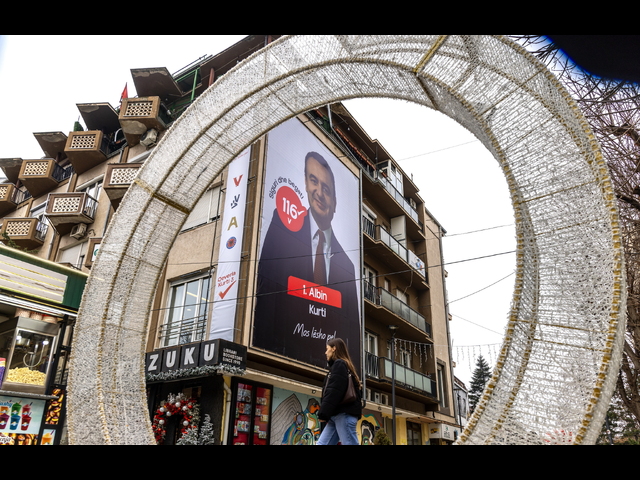
(ANSA) - PRISTINA, DEC 26 - Campaigning in Kosovo closed in the evening ahead of Sunday's early parliamentary elections, which are being looked forward to in the hope of ending an entire year of political deadlock in the small Balkan country. The year-end vote was in fact called because of the inability to form a new government after the February 9 legislative elections. Despite having won that consultation ten months ago, Premier Albin Kurti's 'Vetevendosje' (Self-Determination, VV, nationalist left) party, without an absolute majority, has been unable in all these months to find allies in Parliament to form a new executive. And this has resulted in genuine political paralysis and an unprecedented institutional crisis. A lost year for Kosovo at a time when the country-the youngest in Europe but among the poorest on the continent-is in urgent need of economic, social and rule of law and democratization reforms. The official unemployment rate remains very high at more than 25 percent, about one-fifth of the population lives below the poverty line, and youth emigration to EU countries does not stop, a genuine social hemorrhage that contributes to further impoverishing the country. With the political impasse, it has not been possible to pass the new budget law for 2026, important measures on mainly the economy and justice have remained pending, while a viable health insurance system is still absent, with the 'education sector suffering from a lack of qualified personnel. Political paralysis has at the same time damaged Kosovo's international image, with the U.S. deciding to suspend strategic dialogue, and with EU funds of more than 800 million euros remaining frozen. Also suffering was the EU-mediated dialogue on normalization of relations with Serbia. No high-level meetings between Serbian President Aleksandar Vucic and Kosovar Prime Minister Albin Kurti have been held in Brussels since September 2023, while the negotiations between the chief negotiators, which have continued, have not produced any major results. Observers and analysts are not much optimistic about the outcome of Sunday's new vote, which could repeat the stalemate that has persisted so far-a new success for Kurti's party, but without sufficient majority to rule alone. A former enfant terrible of Yugoslav politics, a leader of student protests against Slobodan Milosevic's regime in whose prisons he remained for a long time, Kurti is accused of pursuing an intransigent and nationalist, strongly anti-Serb political line, with Belgrade openly accusing him of ethnic cleansing against Kosovo's Serb population. The new difficulties ventilated in the aftermath of the vote and speculation about possible coalitions for the new government could, moreover, become intertwined with political games in Pristina ahead of presidential elections scheduled for March and set to decide who will take the place of current President Vjosa Osmani. (ANSA).