
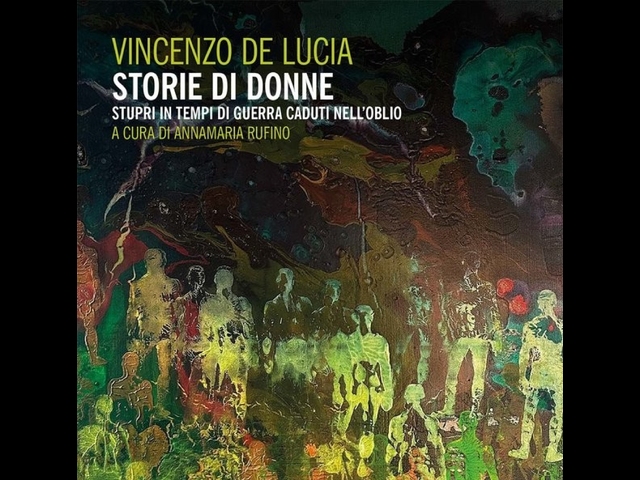
(di Francesco De Filippo) (ANSA) - TRIESTE, DEC 8 - VINCENZO DE LUCIA, "WOMEN'S STORIES. STUMPS IN TIME OF WAR FALLEN IN OBLIGATION" (Mimesis; 122 pp.; 12 euro) The subject of a collective repression that may have multiple reasons-such as the fact that World War II was such a slaughterhouse that it is difficult to distinguish individual episodes and chapters of history or because the atrocities committed by the Nazis were so appalling that the revenge of the victors was foregone if not right-the violence carried out by British, U.S. and Soviet soldiers in occupied Germany only recently finds a place in historical reflection. Vincenzo De Lucia with the essay "Stories of Women. Wartime rapes that have fallen into 'oblivion," resurfaces, in their shimmering horror, horrific stories. According to some historians between 1.4 and two million German women throughout Germany suffered sexual violence, in the last months of World War II and in the early postwar period after the fall of the Third Reich; 900,000 in Berlin alone. Inflicting such suffering were the liberating armies: the Red Army but not only, also U.S., British, French soldiers. It was not a concatenation of cases but a strategy: yet another devastating use of rape as a weapon of war. With unimaginable consequences such as the high number of suicides. Some - men and women - killed themselves before the invasion, but so many women who remained and were raped could not withstand the pain and killed themselves: De Lucia recalls that "in the month of April 1945 alone in Berlin there were 3,881 suicides, in all of Germany over 7,000. Many threw themselves into the Havel River with bricks in their pockets. "Enjoy the war, peace will be terrible," the Nazis argued the last months of the conflict, aware that they would pay for, among other things, the systematic looting operated by the Wehrmacht in occupied areas, which did not let German homes-not even during periods of rationing-go without Danish butter, French cheese, Czechoslovakian beer, Ukrainian sunflower oil. De Lucia goes beyond the brutal chronicle and analyzes the silence of German society itself around this phenomenon; for perhaps different reasons, but equally on both sides of the Berlin Wall. The author ideally goes to sit in the living room of a German home at the end of the waves of brutality and describes the end of the power of the Nazi male: defeated protector of family and home, with no more honor, stuck in silence. A shattered myth that overshadows the violence suffered by his wife. Who therefore finds no help, no support, no understanding. Nor even any compensation. A dishonor that also creates an insurmountable wall of misunderstanding with his children. In the GDR, the situation was perhaps more complex. While the Urschuld, "the original guilt of the Germans," as De Lucia defines it, resurfaced, it could not be hushed up that the soldiers had been rapists, but equally it had to be acknowledged that the soldiers themselves were the ones who had removed them from the fascist yoke. Not to mention that not all of the abused women aborted and therefore the traumas took on a transgenerational character. In short, women not only violated but also marginalized, discriminated against, deliberately silenced. (ANSA).