
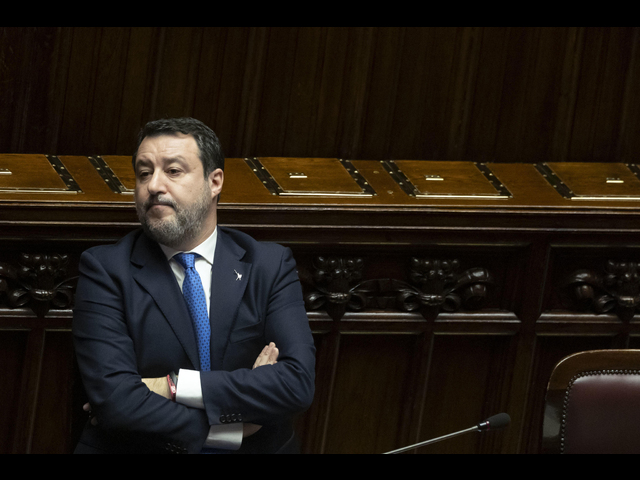
(ANSA) - BELGRADE, JUL 7 - Serbia is investing heavily in economic and infrastructure development, with Chinese companies leading the way. However, Italy, which already has a strong presence in the country with over 1,200 large and small businesses, can contribute to this "renaissance" because of the quality of its products and experience. This was the main purpose of the two-day visit of Minister of Transport and Infrastructure Matteo Salvini to Belgrade, where he had a working meeting yesterday with Serbian President Aleksandar Vučić. "I congratulated President Vučić and his government colleagues," he said in a brief meeting with journalists at the Italian Embassy in Belgrade. "They have achieved something unseen in Serbia for decades." "They have an unprecedented investment strategy for the highway, railway, and river networks. We can demand more space for Italian companies, which have extensive expertise in this area. "It's obvious," he said, "that we're competing with Chinese giants. However, I've seen a lot of attention paid to the quality and product of our companies and our engineering: on the Belgrade Ring Road, the extension of the railway network, the planning of the Trieste-Belgrade line, or the river projects, I think there will be plenty of space for Italian companies in the coming years." Are Italian companies in the lead? "Yes," Salvini responded, "there are multiple tenders that are either underway or about to be launched." The League leader expressed support for Vučić, stating, "I hope there is continuity in government action in Serbia, given the coming elections, and I expect this renaissance to continue this spring." Salvini told ANSA that the Trieste-Belgrade corridor is a priority for all of his fellow Serbian ministers. The complexity arises from the fact that it involves four countries. However, "I have proposed that Italy take advantage of some international opportunities to take the lead, not only in the planning of the passenger corridor, which has already been completed by the Polytechnic University of Milan, but also in the goods corridor." The line must overcome some significant challenges, such as Croatia's dozens of kilometres of single-track. However, directly connecting Trieste with Belgrade, passing through Croatia and Slovenia, "serves not only the port of Trieste, but the entire Western Balkans." Salvini, who met with Serbian Minister of Economy Adrijana Mesarović and Minister of Construction, Transport, and Infrastructure Aleksandra Sofronijević, said he will meet with Friuli-Venezia Giulia Governor Massimiliano Fedriga tomorrow, who is from Trieste and has every interest in speeding up the process, even if "it will take years." (ANSA).