
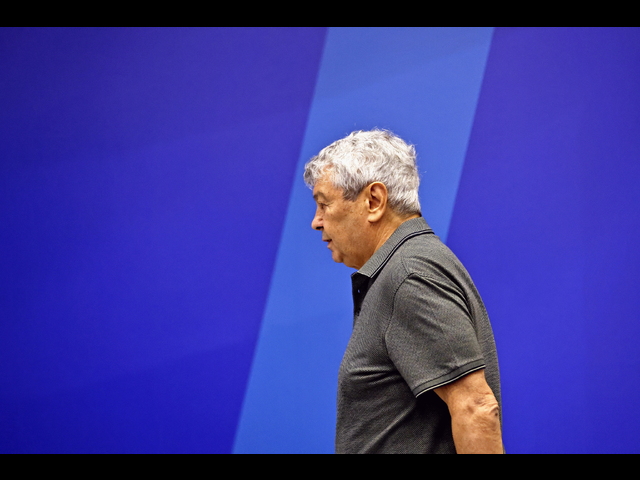
(ANSA) - ROMA, APR 8 - In Romania he was, and will remain, a legend, but Mircea Lucescu, an excellent player but above all a great coach who died at the age of 80 in Bucharest from a heart attack days ago, had also left his mark in Italy, where he coached Pisa, Brescia and Inter. And it is precisely the Milanese club among the first to remember "one of the most influential and respected coaches on the international scene, capable of leaving a deep mark wherever he coached thanks to his vision, charisma and an extraordinary culture of the game." He has lived by football, Lucescu, in a career that began on the professional field as early as 1963 and continued in 1982 with his first bench in Romania, and he can be said to have 'died' by football, as it was only on March 26 that he led the Romanian national team in the World Cup playoff match it lost to Vincenzo Montella's Turkey. To be there, he had left the hospital where he was due to an illness he had been struggling with for months. "I can't leave as a coward," he had said. A few days later he had been stricken with another illness while preparing for a friendly with Slovakia, so he was hospitalized in Bucharest. He seemed out of danger, then suffered a heart attack and slipped into a coma, leaving little hope of recovery. The whole country rallied around the man who, along with George Hagi, was its footballing symbol. "We lose not only a brilliant strategist, but also a mentor, a visionary, and a national symbol who took the tricolor to the highest heights of world success," wrote the Romanian Football Federation. As a player he became the emblem of Dinamo Bucharest, a club with which he won seven league titles, but Lucescu also shone in a national team jersey, participating in the 1970 World Cup in Mexico, where, as captain, he had faced Pelé's Brazil and and Bobby Moore's England in the round. But it was as a coach that he achieved the most remarkable results. As coach he led the national team to the 1984 European Championships, returning to his leadership in 2024, while with club teams he triumphed in half of Europe, with Galatasaray and Besiktas in Turkey, and with Shakhtar Donetsk and Dinamo Kiev, in Ukraine, winning 37 trophies and becoming among the most successful coaches in the history of world soccer. His experience in Italy was an important one, beginning at Pisa in the 1990-91 Serie A championship-when the Tuscans even went to the top of the standings, the Nerazzurri club recalls in expressing its condolences-and then moving on to Brescia, which he immediately took from Serie B to Serie A in 1992. In an alternation of relegations and new promotions, he finally resigned in 1996 after what then president Corioni called "five wonderful years." In December 1998, after a brief appearance at Reggiana and a return to Bucharest, in Rapid, he arrived on the Inter bench, leading the Nerazzurri to the quarterfinals of the Champions League, but resigned the following March after 22 games. "A coach of great human and professional depth, Lucescu embodied values of competence, elegance and passion, leaving an important legacy in the world of soccer," the Milanese club further emphasizes. Countless, already shortly after the announcement of his passing, were the expressions of condolences that came from the clubs he led and from the players and colleagues Lucescu met. One of the last, Montella himself, who had embraced him at length before and after the playoff match that qualified Turkey for the World Cup, another national team coached by a man who wrote so many pages of moderao soccer history. (ANSA).