
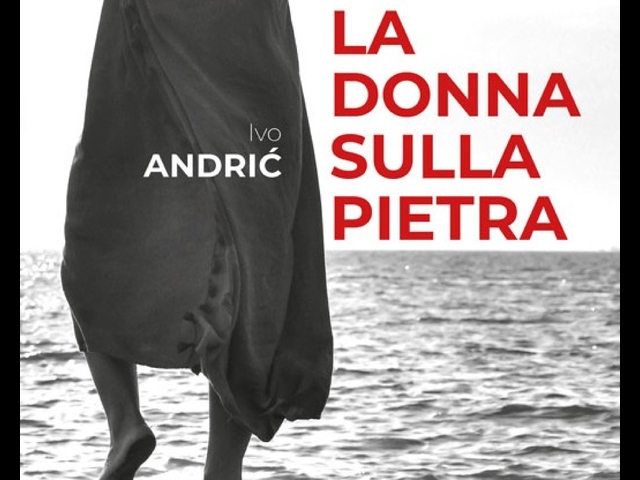
(by Francesco De Filippo) (ANSA) - TRIESTE, MAR 30 - "THE WOMAN ON THE STONE" BY IVO ANDRIC (Bottega Errante Editions; pp. 171; €18.00) Loneliness, personalities repressed to conform to social mores or regimes; incommunicability. These are the main facets of the nine short stories that make up the volume "The Woman on the Stone" by Bosnian writer and Nobel laureate in literature Ivo Andric. A volume that, after Zandonai in 2011, is now republished by the publishing house Bottega Errante for a translation by Alice Parmeggiani and with an afterword by Bosnian writer and translator, Friulian by adoption Bozidar Stanisic. In sparse and correct prose, lucid without squiggles, Andric (1892-1975) peeks behind the scenes of the world of the East when that planet was still shrouded in mystery. In the short stories, written between 1934 and 1964, Andric observes and describes everyday domestic life from outside a window or a keyhole, thus revealing the real thoughts that plague Alojz Ban ("The Party"), a small and disrespected civil servant, a "little mouse" (a nickname taken from his surname) who one day a year, on his name day, finds the strength, by getting drunk, to imagine rebelling against his superiors, religious and civil authorities, and the whole world. Only his wife can rescue him by dragging him back to normalcy at the end of a crescendo of madness that culminates in an inevitable severe physical illness. As in Alojz's, Andric also penetrates the intimacy of Andrija Zerekovic ("The Abused"), a small and ugly but respected entrepreneur who was lucky enough to marry the beautiful Anika. But instead of being placated by the satisfactions that life has given him, at home at night, in private, he forces his wife to listen to rambling exaltations of himself revealing himself to be megalomaniacal and repressed. Anika's life comes out shattered, violated though without any physical violence: a silent but courageous woman will know how to rebel against her situation even though she is aware that she will pay a very high price. Andric is attracted by small, unexpected, revolutionary gestures, thunderbolts in the course of a monotonous, gray existence. This is also the case with the distinguished professor who in "The Walk," suddenly and for no apparent reason, interrupts the routine of his life by chasing a young woman he crosses in the street. He will follow her for miles, on foot, at night, until he finds himself in a dangerous situation. Andric was not just a writer; indeed, his real work was in diplomacy, and still a plaque commemorates him in Trieste, on a building downtown, where he was attaché to the Royal Consulate of the Kingdom of Yugoslavia in 1922-23. In the Julian capital he also set four short stories Finally, the story that gives the collection its title: "The Woman on the Stone." The beautiful Marta L., a former opera singer now middle-aged, sunbathes on a rock and in a bathing suit compares her own body with that of the other bathers: inevitable runs the thought of old age, that process of falling apart that transforms bodies and also changes the ways of thinking and relating to the world. (ANSA).