
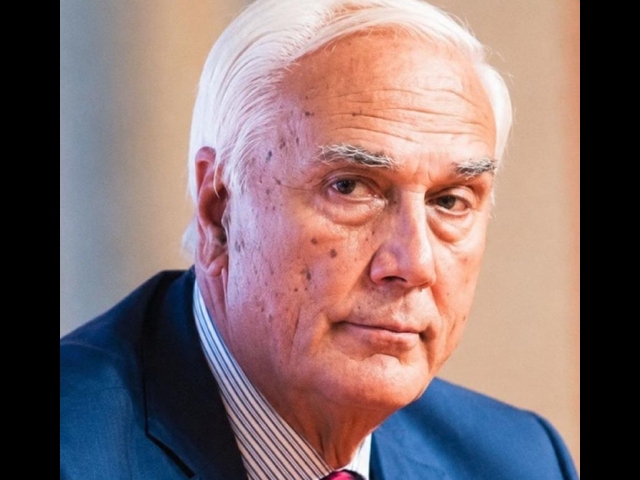
(ANSA) - UDINE, 27 OTT - "The European Union will have to support the transition, help strengthen institutions and offer a credible path toward membership, without demanding that Belgrade immediately align itself with Western positions on Russia and Ukraine". Arduino Paniccia, a geopolitical expert and president of ASCE, the School of Economic Warfare and International Competition in Venice, said this on the sidelines of a meeting in Udine, commenting on the outcome of Serbia's parliamentary elections. "The issue is not simply bringing Serbia into Europe," Paniccia said, "but convincing Serbs that Europe can represent their future without forcing them to renounce their history." He added: "Serbia voted to change its political system, but has not yet decided to change its geopolitical alignment." "The victory of the Student List in Serbia marks a historic turning point, likely the most significant since the fall of Milošević," he observed. "After fourteen years in power, Aleksandar Vučić has suffered a defeat that has dismantled the political system built around his leadership." "The first challenge will be forming a government," Paniccia explained. "It is unclear who will lead the executive branch or how a movement formed to challenge authority can become a governing class capable of administering a complex and deeply divided country." On the international front, "according to the movement's position, Kosovo remains an integral part of the national territory," he stressed. "Military neutrality continues, and for now, no sanctions against the Russian Federation are planned." "Many moderate voters who abandoned Vučić still harbor pro-Russian sentiments," Paniccia underlined. "Relations with Moscow - he added - are rooted in history, culture, the Orthodox religion, and memories of the Balkan conflicts." (ANSA).