
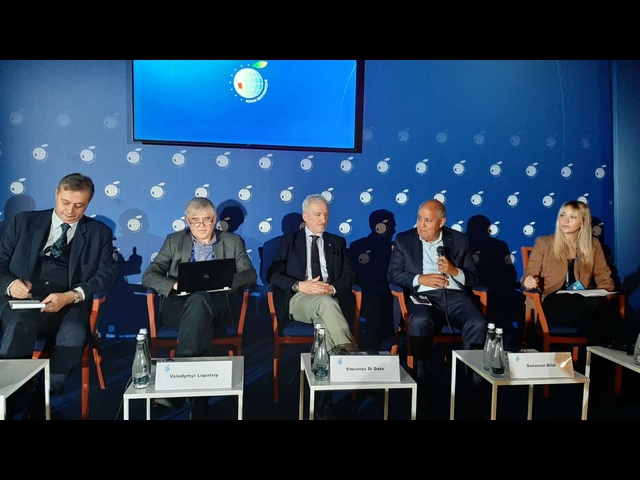
(ANSA) - KARPACZ, 11 SET - Hybrid threats require Europe to overcome the fragmentation between infrastructure, technology, information, the economy and society, and to identify in advance the connections that can transform isolated vulnerabilities into a systemic crisis. This was the message put forward by Albertina Nania, Professor of History and Theories of International Economic Relations at Roma Tre University, who spoke on the panel 'Beyond the Front Lines: Strengthening European Preparedness against Hybrid Threats' at the 35th Karpacz Economic Forum in Poland. 'European preparedness today is the ability to anticipate how interconnected vulnerabilities might be exploited before they turn into a systemic crisis,' Nania emphasised, highlighting the importance of the cognitive dimension. Disinformation, manipulation of information, artificial intelligence and influence operations, she explained, are not merely communication issues: they can increase uncertainty, undermine trust, amplify divisions and compromise the quality and speed of decision-making. One example is a cyber-attack on an essential service: even if the technical damage were limited, false information, contradictory official statements and AI-generated content could greatly amplify the social and political consequences. According to Nania, the main vulnerabilities relate to "fragmented governance, insufficient foresight and difficulties in bringing diverse expertise into decision-making processes". The priority, therefore, would not be to create new tools, but to better link existing ones. Proposals include assessing the interdependencies between risks, integrating the cognitive dimension into exercises, developing scenarios that combine infrastructural, cyber, economic, information and geopolitical threats, and strengthening links between universities, research centres, institutions and the private sector. "Preparedness," Nania concluded, "cannot stop at the EU's borders: the Mediterranean, the Red Sea, the Sahel and the Horn of Africa are linked to European security through energy, trade, digital infrastructure and supply chains. 'Hybrid threats exploit fragmentation,' she observed, 'and European preparedness must be built on integration'." (ANSA).