
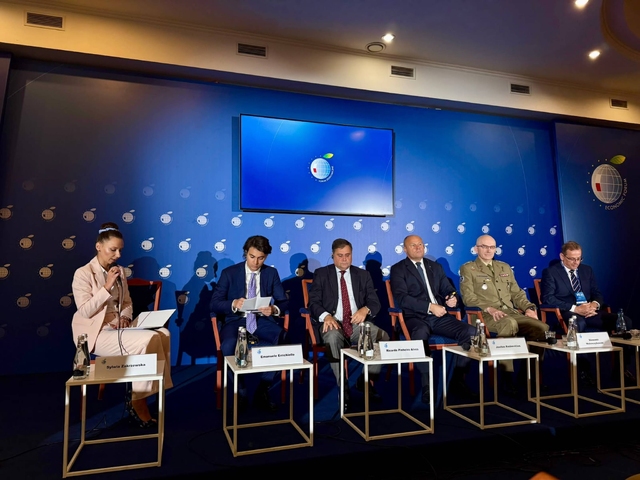
(ANSA) - KARPACZ, 11 SET - Central and Eastern Europe must prepare for a protracted standoff with Russia, which is set to take on different forms regardless of the outcome of the war in Ukraine. This is the scenario outlined for 2027 during the panel discussion 'A year of war? A year of peace? Security prospects for Central and Eastern Europe in 2027', organised as part of the 35th edition of the Karpacz Economic Forum in Poland. The debate, which focused on the prospects for peace and security in the region, was attended by representatives from institutions, the military, industry and the research sector in Poland, Lithuania, Portugal and Italy. At the heart of the discussion was the need to strengthen conventional deterrence and European defence industrial capacity, alongside resilience in the face of hybrid threats and greater strategic autonomy, whilst maintaining the transatlantic bond. "Europe must prepare for a protracted standoff and counterbalance Russian assertiveness," said Emanuele Errichiello, deputy director of the Centre for International Studies (CSI) and a Fellow at the London School of Economics. "Weakness invites the next show of force, whilst credible deterrence is what can persuade Moscow to reach an agreement that it will then be willing to honour," he added. According to Errichiello, European security must be considered "from all angles", including domains such as cyberspace, undersea cables, disinformation and the exploitation of migration flows. Particular attention was also paid to the southern flank and Russia's role in the Mediterranean. "The eastern and Mediterranean fronts are dimensions of a single, indivisible security space: the European one," emphasised Errichiello, identifying the resilience of European societies as "the most neglected aspect" of security. On the Polish side, contributions from representatives of the Armed Forces General Staff, Sławomir Walenczykowski; Polska Grupa Zbrojeniowa, Adam Leszkiewicz; and the Military University of Technology, represented by Robert Wozniak, emphasised the need to strengthen the industrial base and deterrence on the eastern flank. Jovitas Raskevicius, from the Special Investigation Service of the Republic of Lithuania, emphasised institutional resilience and hybrid threats, whilst the president of idD Portugal Defencem, Ricardo Pinheiro Alves, highlighted the need to strengthen European defence capabilities within the framework of the Atlantic Alliance. (ANSA).