
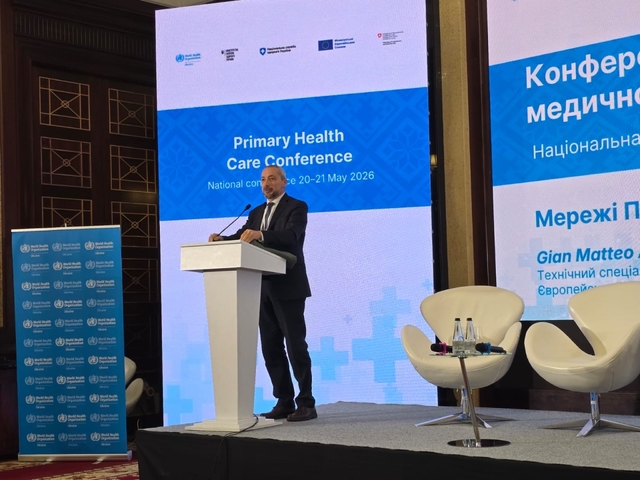
(ANSA) - TRIESTE, MAY 21 - Key European organizational models to "strengthen access to primary care in a structurally fragmented and heavily war-affected context," which has profoundly affected the continuity and delivery of health care services," among which attention was paid to Italy's "Casa di Comunità" reform, were outlined by Gianmatteo Apuzzo, a Trieste-based official who spoke on behalf of the World Health Organization (WHO) European section in Kiev at the second day of the National Conference on Primary Health Care. Apuzzo, serving in the Almaty (Kazakhstan) office, in his speech, delivered in the presence of Ukrainian Deputy Minister of Health Ievgenii Gonchar, and institutional representatives, international experts and health workers involved in strengthening the country's health system, pointed to the "Community House" as a "possible solution to improve accessibility to services, encourage the networking of territorial facilities and strengthen social and health integration." "In a scenario constantly suspended between normality and emergency," he explained, "it becomes essential to protect the ability to 'dual track,' to simultaneously maintain ordinary access to essential care services and emergency response. "When working to strengthen a health system and improve its accessibility," he added, "it is necessary to maintain a long-term view. When the war ends, demand for health will grow rapidly because many people have given up or postponed care and services, and the return to normalcy will also coincide with a return to demand for care that has been postponed for years." The conference also reiterated the strategic role of Primary Health Care as a pillar for the resilience of the Ukrainian health care system and a key lever for ensuring continuity of care, equity of access, and quality of care even in crisis settings. (ANSA).