
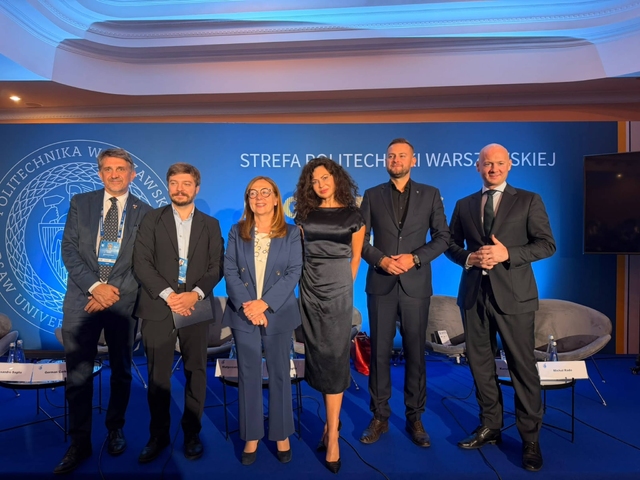
(ANSA) - KARPACZ, 11 SET - The air link between Turin and Poland has the potential to be much more than just a tourist route: it can serve as a genuine infrastructure supporting economic relations between two regions that share industrial challenges and opportunities. This was the message that emerged from the discussion on the theme "Connecting regions. Creating opportunities. How air connectivity can build long-term European partnerships', organised at the 35th Karpacz Economic Forum by Confindustria Polonia and Wrocław Airport. A bond with deep roots, particularly in the automotive sector. "Poland has always been a key player for the automotive industry," emphasised Patrizia Paglia, automotive delegate for Confindustria Piemonte, recalling Fiat's investments and the involvement of numerous Piedmontese companies in the production chain in Tychy. In the past, the Turin-Katowice flight had also helped to consolidate these ties, which subsequently gradually weakened with the slowdown in the automotive sector and the reduction in flight connections. According to Paglia, it would be strategic today to start afresh in Lower Silesia, an area that is still relatively new to Italian investment and characterised by an attractive industrial and environmental context. The flight would represent "an initial point of contact", which must, however, be made a permanent fixture with frequencies suitable for business travel as well. A connection designed solely for weekend travellers is therefore not enough: routes and services are needed that facilitate regular exchanges of managers, technicians and entrepreneurs. The connection, notes German Carboni, head of the Economic and Commercial Affairs Office at the Italian Embassy in Poland, may even be a "prerequisite" for launching structured economic dialogue. Turin and Lower Silesia are, in fact, undergoing similar transformations, from the energy transition to the industrial transition. And the major Taiwanese investment in electromobility in Poland (a technology park for electronics manufacturers, ed.) could open up opportunities for the entire European supply chain, including that of Piedmont. The aim, therefore, is to look beyond the tourist season. Alessandro Saglio, vice-president of Confindustria Polonia, is focusing in particular on Wrocław and Warsaw: maintaining certain connections throughout the year would make it possible to transform initial tourist flows into mutual understanding and, over time, into business relationships. "Let's start with flights," is how he sums it up: because a connection can give rise to partnerships between businesses, universities and people. And there is no shortage of sectors on which to build new relationships: from the automotive and aerospace industries to electronics and electromobility. The challenge is to ensure that the air link is not the end point, but the first link in a mobility chain capable of supporting people and businesses even after they have landed. (ANSA).