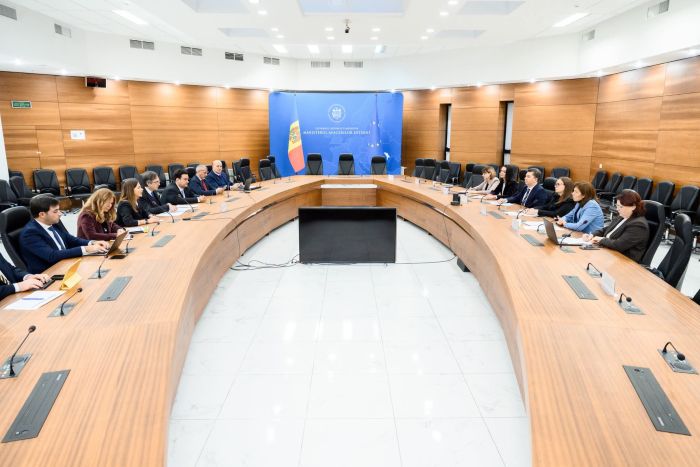
The needs assessment mission to the Republic of Moldova under the Falcone-Borsellino Programme for the Balkans and Central Europe concluded in Chișinău on 25 November.
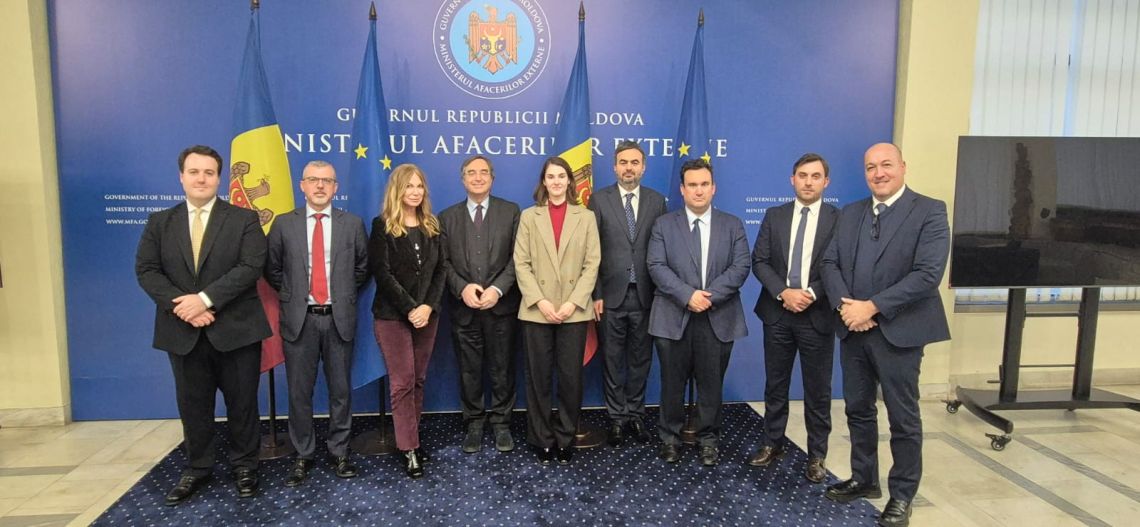
Over three days of meetings in Chișinău, the Italian delegation, led by the Programme Director, Magistrate Giovanni Russo, met with more than fifteen Moldovan institutions operating in the fields of justice, security and integrity. The first day of the mission also saw the participation of the Ambassador of Italy to the Republic of Moldova, H.E. Giuseppe Maria Perricone, reflecting the Italian Embassy’s support for and commitment to the Programme’s activities.
Throughout the mission, the delegation was accompanied by the First Secretary of the Italian Embassy, Armando Pascale, who attended all the meetings and activities scheduled on the agenda.
The Italian delegation comprised Alessio Costagliola and Patrizio Mancini, members of MAECI’s Legal Diplomacy Team; Major Carlo Scardini of the International Relations Office of the General Command of the Carabinieri; Chief Marshal Giuseppe Alfieri of the Guardia di Finanza’s Special Technological Fraud Prevention and Enforcement Unit; and Sonja Levstik, international relations expert at the Italian National Anti-Corruption Authority (ANAC).
The meetings, characterised by direct and practical exchanges, addressed the challenges facing Moldovan institutions on the country’s path towards EU accession. Cross-cutting issues identified during the discussions included crypto-assets, financial investigations and asset recovery, judicial cooperation, integrity and corruption prevention, as well as the emerging threat posed by new psychoactive substances. Various forms of cooperation were discussed, including study visits, joint activities involving concrete cases, specialised training and exchanges among practitioners.
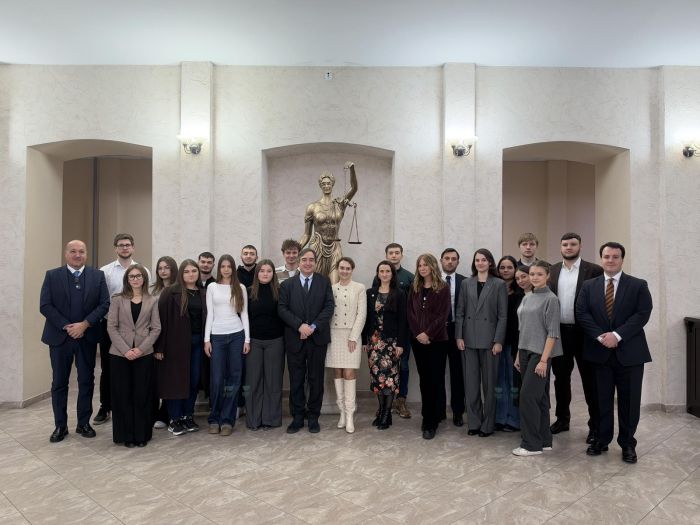
The mission concluded at the Faculty of Law of Moldova State University, where academic staff and students engaged in discussions with the delegation on the need to reconcile the effectiveness of operational tools with the safeguards of the rule of law, with particular interest in artificial intelligence applications. Prospects for future cooperation with the academic community were also explored.
“Institutions tell us what they need to operate more effectively tomorrow. The academic community helps us understand whether what we propose is sound, sustainable and consistent with the country’s legal culture,” said Giovanni Russo.
In line with the principle of co-ownership underpinning the Programme, it will now be up to the Moldovan institutions to identify their priorities, on the basis of which the programme of activities for 2027 will be defined.
The Programme is promoted and funded by the Italian Ministry of Foreign Affairs and International Cooperation (MAECI), coordinated by Minister Plenipotentiary Luigi De Chiara, MAECI Coordinator for Legal Diplomacy, and implemented in cooperation with the Central European Initiative (CEI).