
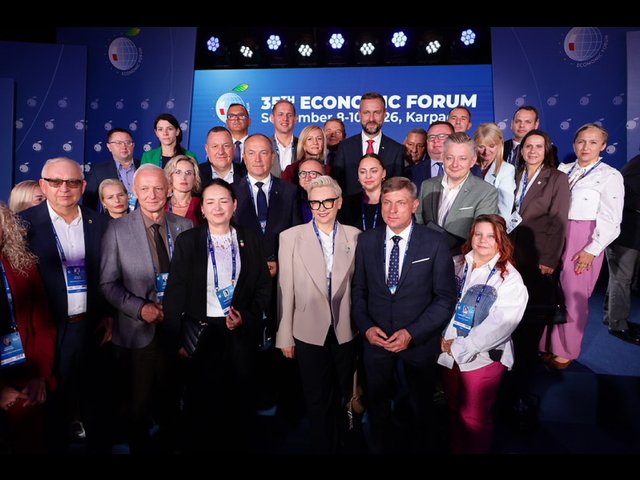
(ANSA) - KARPACZ, 11 SET - Security, competitiveness, infrastructure and new technologies were the key themes of the 35th Karpacz Economic Forum, which concluded yesterday after three days of meetings attended by over 6,000 participants and featuring more than 500 panel discussions. Under the title 'Architecture of the New Order - Stability in Times of Change', the Polish summit brought together representatives from politics, business, institutions and academia. Many government ministers were in attendance, confirming the event's significance in the national debate. Among them was Deputy Prime Minister and Minister of Defence Władysław Kosiniak-Kamysz, who spoke on the issues of security and the strengthening of Poland's military capabilities, against a backdrop marked by the war in Ukraine and the redefinition of the European balance of power. The centrality of defence was intertwined with that of industry, infrastructure and dual-use technologies. The Forum also had a distinct political dimension, with a remote debate within the conservative camp following the divisions that have plagued the PiS. On one side was former Prime Minister Mateusz Morawiecki, who was expelled last July along with 40 MPs and is now the leader of a new political movement (Development Plus, ed.), and on the other was Przemysław Czarnek, the prime ministerial candidate for the autumn 2027 general election: different positions on the future of the political landscape were debated without a direct confrontation, transforming Karpacz into a sort of observatory on the future alliances of the Polish right. On the economic front, the opening session focused on the prospects for Central and Eastern Europe, emphasising the need to strengthen resilience, investment and competitiveness. Ample attention was also given to artificial intelligence, digitalisation and cybersecurity, as well as energy and infrastructure. On the geopolitical front, the need emerged for greater European capacity to respond to new threats and for closer cooperation between the countries of Central and Eastern Europe. At the end of the three days, the prevailing message was that Poland is called upon to consolidate its economic and strategic influence in the region, focusing on security, investment and innovation, whilst, in the background, a new contest is unfolding over the political balance of power on the right. (ANSA).